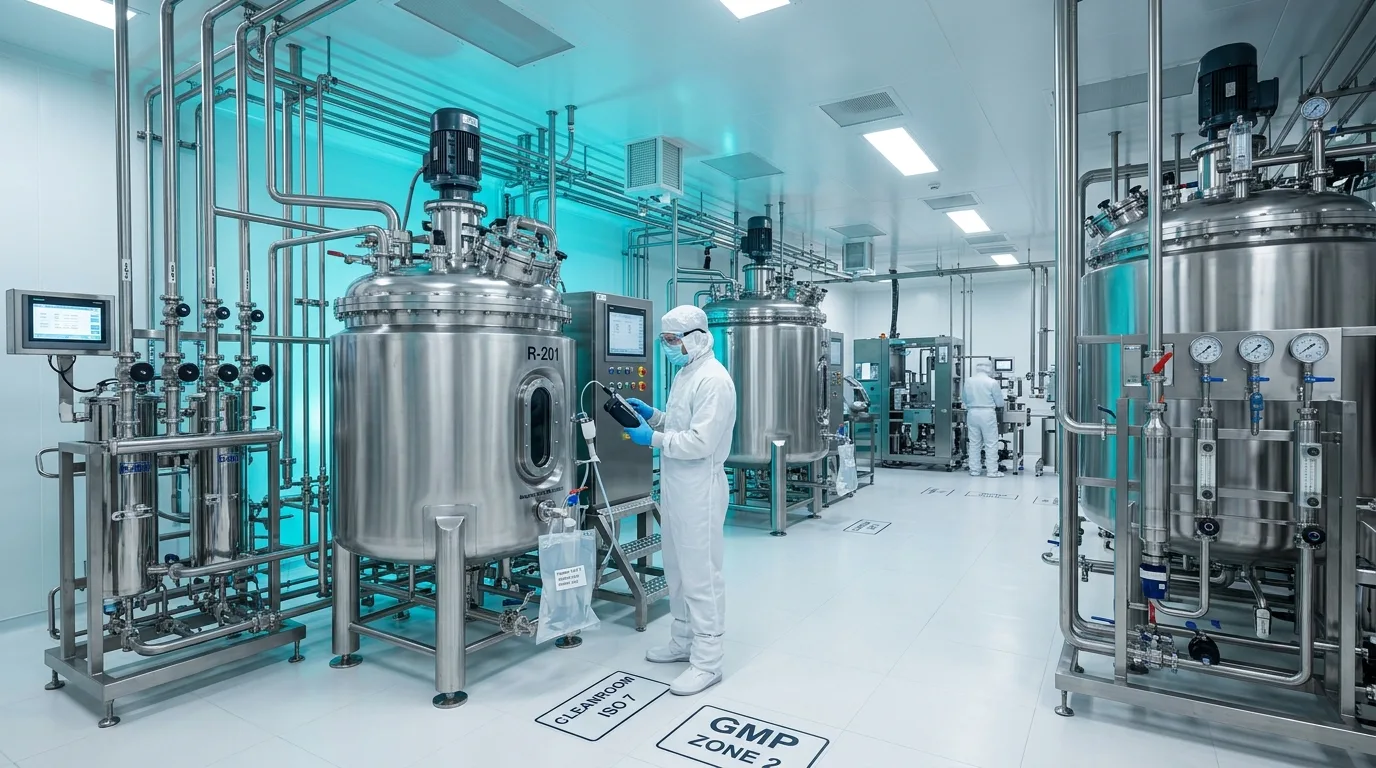
In multi-product biopharmaceutical manufacturing suites, cross-contamination is one of the most critical risks to patient safety. Regulatory authorities—including Health Canada, EMA (Annex 15), and the US FDA—mandate scientifically sound, risk-based Cleaning Validation programs to demonstrate that automated Clean-In-Place (CIP) and Clean-Out-of-Place (COP) cycles consistently reduce residual product, cleaning agents, and bioburden to acceptable limits.
Determining Maximum Allowable Carryover (MACO)
The foundation of a robust cleaning validation protocol is the scientific calculation of the Maximum Allowable Carryover (MACO). Modern regulatory expectations rely on toxicological evaluations using Permitted Daily Exposure (PDE) or Health-Based Exposure Limits (HBEL), rather than relying solely on arbitrary 10 ppm or 0.001 therapeutic dose thresholds. The calculated MACO must account for the shared equipment surface area, the minimum batch size of the subsequent product, and the maximum daily dose administered to patients.
Sampling Strategies: Swab vs. Rinse TOC Recovery
Analytical verification requires validated sampling methods. Swab sampling targets worst-case, hard-to-clean geometric locations (such as impellers, dip tubes, spray balls, and gasket interfaces) and is evaluated via Total Organic Carbon (TOC) and product-specific ELISA or HPLC assays. Recovery study percentages must be rigorously established for each contact material (316L stainless steel, EPDM, PTFE, silicon). Combined with rinse water conductivity testing and visual inspection under intense illumination, these protocols ensure audit-ready compliance during regulatory inspections.
References
- EMA (2018). Guideline on setting health based exposure limits for use in risk identification in the manufacture of different medicinal products in shared facilities. European Medicines Agency. EMA/CHMP/CVMP/SWP/169430/2012
- Parenteral Drug Association (PDA). (2010). Technical Report No. 29: Points to Consider for Cleaning Validation. PDA Journal of Pharmaceutical Science and Technology. PDA TR No. 29