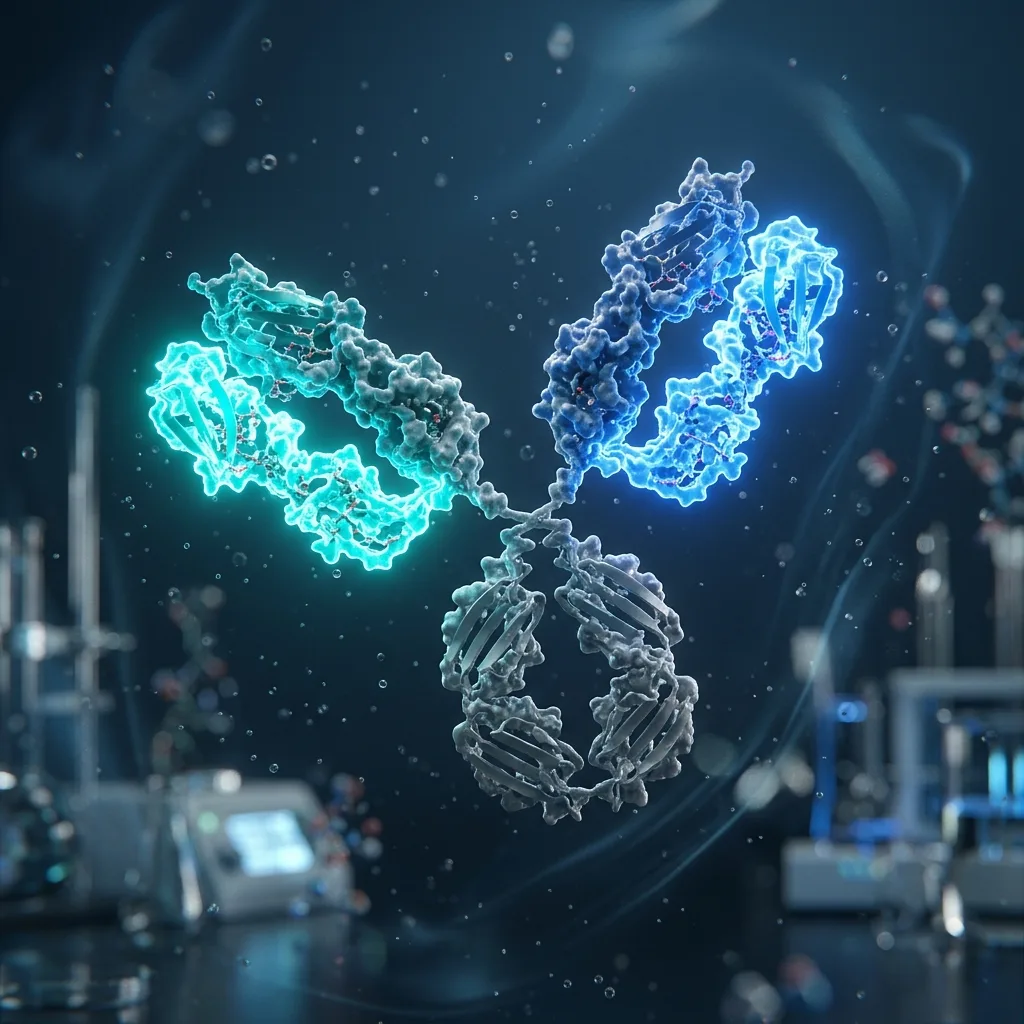
The biopharmaceutical landscape is rapidly evolving beyond standard monoclonal antibodies (mAbs) towards more complex modalities, with bispecific antibodies (bsAbs) leading the charge. By engineered design, bsAbs can bind to two different epitopes simultaneously, opening up revolutionary therapeutic possibilities—most notably in oncology, where they can physically bridge a T-cell to a tumor cell.
The Downstream Challenge
However, the structural complexity that makes bsAbs so effective clinically also makes them notoriously difficult to manufacture and purify. Unlike standard mAbs, the expression of bsAbs in mammalian cells often leads to a high percentage of mispaired byproducts, such as homodimers (where two identical heavy chains pair) or half-antibodies.
Moving Beyond Standard Protein A
Standard Protein A chromatography, while excellent for capturing intact mAbs, struggles to differentiate between the desired heterodimeric bsAb and product-related homodimer impurities, as both often contain the required Fc region for binding.
To overcome this, downstream processing scientists must deploy more sophisticated purification strategies. This includes using mixed-mode chromatography, highly optimized ion exchange (IEX) gradients, and specialized affinity resins designed to selectively bind only one specific arm of the bispecific molecule. As pipeline focus shifts towards these next-generation molecules, mastering their unique downstream challenges is becoming the defining skill for modern purification engineers.
References
- Gétaz, D., et al. (2024). The downstream purification of bispecific antibodies. Antibodies. doi:10.1016/j.ab.2024.115692
- Wang, J., et al. (2021). Current trends and challenges in the downstream purification of bispecific antibodies. Antibody Therapeutics. doi:10.1093/abt/tbab007